

Liqui Moly is much more than just a shelf of engine oil – it is a symbol of German engineering and quality. It is a brand that has made it its mission to ensure the long life and maximum performance of car engines, offering everything from top-quality oils to specialized additives.
Why is Liqui Moly a Trusted Choice for Car Owners in Estonia?
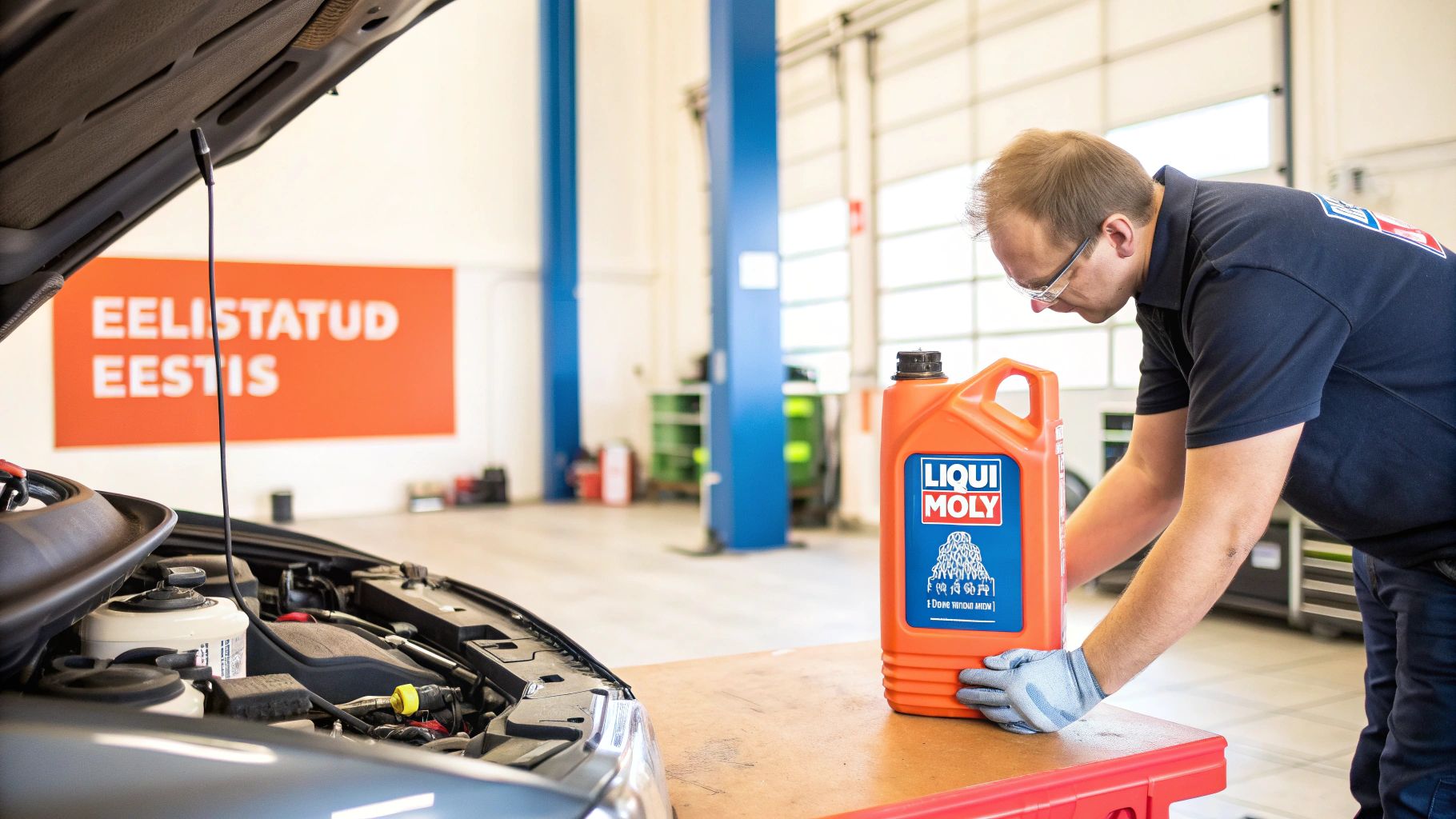
Imagine standing in front of a store shelf and having to choose from dozens of oil bottles. Why does the name Liqui Moly inspire so much trust among many? The answer lies not in clever marketing but in one unwavering principle: all products are exclusively manufactured in Germany.
This “Made in Germany” label is not just a catchy phrase. It means that every production step, from raw material selection to the last drop being bottled, is subjected to the strictest quality control.
The result is products that not only meet but often exceed the stringent requirements set by car manufacturers themselves. This is why Liqui Moly has become a favorite among both professional mechanics and ordinary car owners in Estonia, where the unpredictable climate puts engines to the test.
More than Just Oil – Comprehensive Care for Your Car
Liqui Moly does not just produce engine oils. The brand's true strength lies in its ability to offer a complete range of products that cover virtually every need of a car. It’s a bit like a doctor who doesn’t just treat the symptoms of a disease but provides a comprehensive treatment plan.
- Top-class engine oils: Provides solid protection whether starting cold on a crisp winter morning or under heavy load in the summer heat.
- Smart additives: Come to the rescue for specific concerns, whether clogged injectors, annoying oil leaks, or noisy hydraulic lifters.
- Maintenance and cleaning products: Help keep the car immaculate both inside and out.
This wide product portfolio gives car owners peace of mind that every part of their vehicle receives the best possible care.
Trust Built on Results
The Estonian engine oil market is fiercely competitive, but Liqui Moly has firmly carved out its place here. The turnover of engine oils and lubricants wholesale in Estonia reaches 60.5 million euros annually, demonstrating how seriously local car owners take quality maintenance. In such an environment, trust is the most valuable currency, which Liqui Moly has earned through years of hard work. You can view the competition authority's market analysis here.
The secret behind Liqui Moly's success is actually a simple formula: products that truly do what they promise. Whether it’s internal engine cleaning before an oil change or cleaning the fuel system – the results are genuinely noticeable and measurable.
This article is your guide to the diverse world of Liqui Moly. We provide practical advice on how to choose the most suitable products for your car to ensure the engine runs smoothly and lasts long. Explore the entire range of Liqui Moly products at OILER.ee online store and find the best for your vehicle.
Explaining Liqui Moly Product Categories
The Liqui Moly product range may initially seem impressively broad and complex. In reality, it’s like a professional mechanic’s toolbox – each tool is designed to perform a specific and important task to achieve the best possible outcome. To better navigate this world, we categorize this vast assortment into four clear and logical categories.
Each category plays a specific role in the car maintenance chain, from vital engine lubrication to small details that ensure the longevity and cleanliness of systems. Understanding the essence of these groups is the first and most important step in providing your car with the best possible care.
Engine Oils – The Lifeblood of Your Car
Engine oil is undoubtedly the heart of the Liqui Moly product portfolio and the most crucial fluid for the engine. It is much more than just a slippery substance – it is the result of high-tech engineering designed to clean, cool, and protect the hundreds of moving parts of the engine even under the most extreme conditions.
Liqui Moly engine oils are broadly divided into two categories: synthesized and semi-synthetic.
- Synthetic oils: These are laboratory-created top products that offer maximum protection, heat resistance, and stability. Well-known series like Synthoil and Top Tec are ideal for modern, high-performance engines that operate at high temperatures and have very stringent manufacturer requirements.
- Semi-synthetic oils: Here, the best properties of mineral and synthetic base oils are combined, providing excellent value for money. They are perfect for older or slightly less demanding engines while still ensuring solid and reliable protection.
Take, for example, one of the most popular products, Liqui Moly Top Tec 4200 5W-30. This is a synthetic oil specifically designed to meet the stringent requirements of the Volkswagen and Audi group (VAG) and other European manufacturers. It allows for extended service intervals and provides indispensable protection for modern diesel particulate filters (DPF).
Additives – Problem Solvers and Preventers
If engine oil is the car's daily “food,” then additives are like vitamins and medicines. Their job is to prevent problems or solve already existing concerns. The selection of Liqui Moly additives is exceptionally broad and can practically be divided into three subgroups.
1. Fuel Additives
Their job is to keep the entire fuel system clean from the tank to the injectors and combustion chamber.
- Cleaning: A product like Injection Reiniger removes deposits from gasoline engine injectors, restoring the correct fuel injection pattern and thereby improving engine performance.
- Protective and maintenance: For example, Super Diesel Additive not only cleans the diesel engine system but also raises the cetane number, which in turn ensures cleaner combustion and better starting in cold weather.
2. Oil Additives
These products are added directly to the engine oil to improve the oil's properties or solve specific mechanical problems.
- Wear-resistant: One of the most famous is certainly Cera Tec, which creates an ultra-strong ceramic protective layer on the metal surfaces of the engine. The result is significantly reduced friction and wear.
- Problem solvers: Products like Oil Smoke Stop reduce oil consumption by sealing gaps between piston rings and valve stem seals, and Hydraulic Lifter Additive quiets the annoying ticking of hydraulic lifters.
3. Cooling System and Other Additives
Of course, the other fluid systems of the car also need care. A good example is Radiator Stop-Leak, which can stop small leaks in the radiator without clogging the system – a quick and effective first aid.
Did you know that Liqui Moly engineers test each additive formula on average nearly a thousand times before it hits the market? Additionally, every batch undergoes strict control to ensure the product's promised effect and complete safety for your car.
The following table provides a quick overview of the main product categories of Liqui Moly and their purposes.
Overview of Liqui Moly Product Categories
| Product Category | Main Function | Sample Product from OILER.ee Selection | Main Application Area |
|---|---|---|---|
| Engine Oils | Lubrication, cooling, cleaning, and protection of the engine from wear. | Liqui Moly Top Tec 4200 5W-30 | Daily engine maintenance according to manufacturer specifications. |
| Additives | Solving specific problems (e.g., stopping leaks, reducing wear) and preventive maintenance of systems (e.g., cleaning). | Liqui Moly Cera Tec | Improving and extending the performance and lifespan of fuel, oil, and cooling systems. |
| Transmission Oils | Lubrication of transmission gears and components to ensure smooth shifting and reduce wear. | Liqui Moly Top Tec ATF 1200 | Maintenance of manual and automatic transmissions according to manufacturer requirements. |
| Maintenance and Cleaning Products | General maintenance, cleaning, and protection of the car both inside and out. | Liqui Moly Brake and Parts Cleaner | Brake cleaning, part lubrication, interior cleaning, leather care. |
As you can see, Liqui Moly covers all areas that a car owner needs to take care of their vehicle.
Transmission Oils – The Invisible Guarantee of Smooth Driving
Transmission oils often remain in the shadow of engine oils, even though their role in ensuring the smooth and quiet movement of the car is absolutely critical. Liqui Moly offers a very wide range of oils for both manual and automatic transmissions.
Choosing the right transmission oil ensures the smooth operation of gears, reduces wear, and helps prevent extremely costly repairs. This is especially important for modern complex automatic transmissions, where the wrong oil can cause serious operational failures or even breakdowns.
Maintenance and Cleaning Products
The last but not least category covers everything else needed for car maintenance. This includes essential brake cleaning agents, silicone lubricants, chain oils, interior cleaning products, and even high-quality leather care products.
All these products are created with the same German precision and quality standards as Liqui Moly's world-famous engine oils. They help ensure that your car is not only technically flawless but also looks good and always provides a pleasant driving experience.
How to Find the Most Suitable Liqui Moly Engine Oil for Your Car
Choosing the right engine oil is like creating the best nutrition plan for your car. The wrong choice can significantly shorten the engine's lifespan, while the right Liqui Moly product ensures long and trouble-free operation. At first glance, this may seem complicated, but the process is entirely logical if you know what and where to look.
The first and most important step is always to peek into your car's user manual. It is like the bible of your car, where engineers have detailed all the requirements that the engine oil must meet. Never skip this step – it is the foundation of the entire selection process.
Understanding Viscosity: What Do SAE Numbers Mean?
You have surely seen combinations like 5W-30 or 10W-40 on oil bottles. This is the SAE (Society of Automotive Engineers) viscosity class, which describes the oil's flow at different temperatures. Simply put, it is the thickness of the oil.
- The number before the “W” (Winter): This indicates how well the oil flows in cold weather, for example, when starting the car on a winter morning. The lower this number (e.g., 0W or 5W), the more fluid the oil is, and the faster it reaches the farthest corners of the engine, providing immediate wear protection.
- The number after the “W”: This indicates the oil's thickness at the engine's normal operating temperature (about 100°C). The higher this number (e.g., 30, 40), the thicker the protective layer the oil leaves in hot conditions, preventing metal-to-metal contact even under heavy load.
A good analogy is honey. Taken straight from the fridge, it is thick and viscous (high “W” rating), but when warmed, it quickly becomes fluid (low “W” rating). Your car needs oil that is fluid enough in winter to protect the engine immediately upon starting and thick enough in summer to handle the heat.
The decision tree below helps you visualize which Liqui Moly product category best suits your goal – whether you are looking for efficiency, maintenance, or maximum protection.
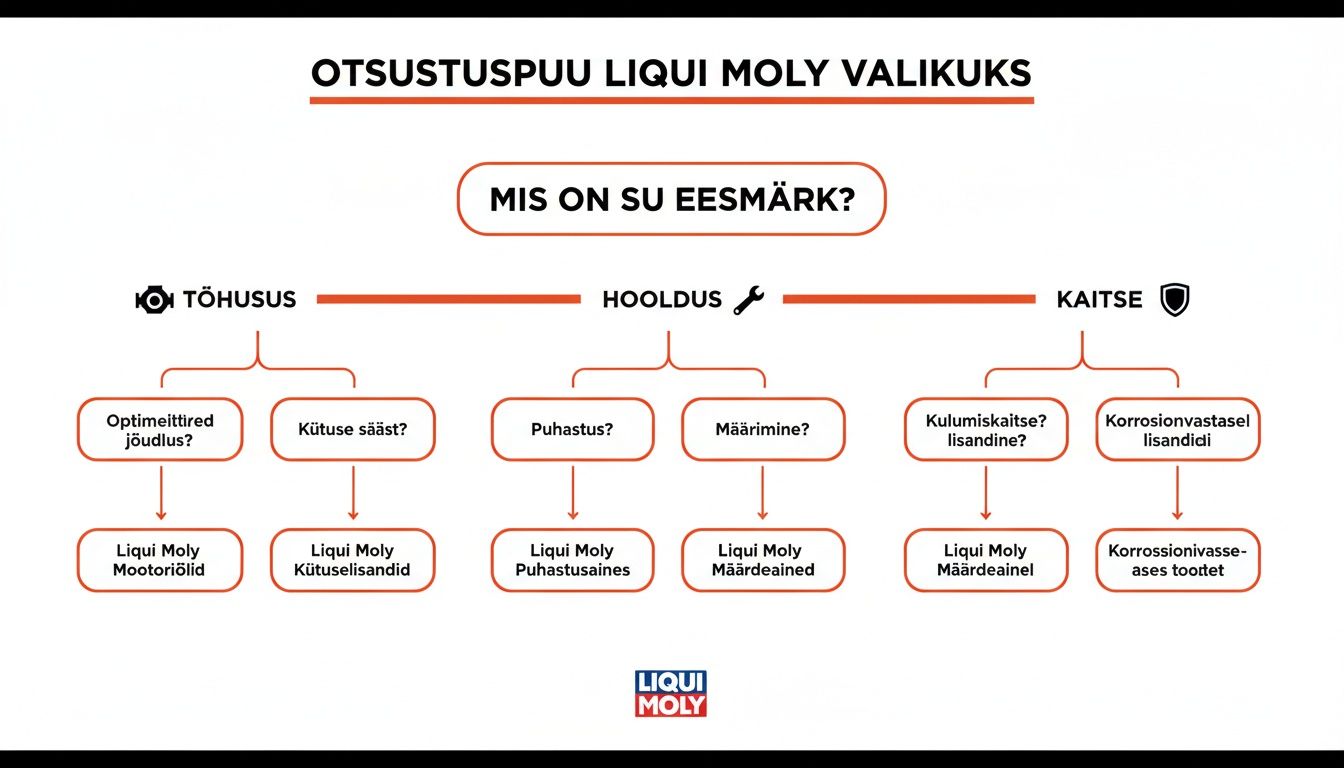
As you can see, setting a clear goal makes it much easier to navigate the wide range of Liqui Moly products.
ACEA and API – The Quality Passport of Oil
Viscosity is only half the truth. Another important code on the oil bottle indicates quality standards. These are like food quality labels that guarantee that the product meets certain requirements. In Europe, the main standard is ACEA, while in America, it is API.
- ACEA (Association des Constructeurs Européens d'Automobiles): The standard of the European Automobile Manufacturers Association. The combination of letters and numbers (e.g., A3/B4 or C3) refers to a specific type of engine and whether the car has an exhaust after-treatment system.
- A/B series: Intended for gasoline and diesel engines without a particulate filter (DPF).
- C series: Specifically designed for modern cars with DPF or sensitive catalysts. These are low ash content (Low-SAPS) oils that are critical for the lifespan of these systems.
- API (American Petroleum Institute): The US standard that uses letter combinations like API SN or API CK-4. “S” stands for gasoline engines (Spark ignition) and “C” for diesel (Compression ignition). The further down the alphabet the second letter is, the newer and more demanding the standard.
Choosing the right ACEA class, especially the C category, is absolutely essential for cars with DPF filters. The wrong oil can quickly clog the filter, resulting in repair bills that can reach thousands of euros.
Manufacturer Approval – The Ultimate Quality Mark
The strictest requirement to always pay attention to is the specific approval from the car manufacturer, or OEM certification. These are codes on the bottle like VW 504.00/507.00, MB-Approval 229.51, or BMW Longlife-04. This means that Volkswagen, Mercedes-Benz, or BMW has tested this specific Liqui Moly oil in their laboratories and given it their official approval.
These approvals are especially important for cars under warranty. If you use oil that does not have the manufacturer's official approval, it may void the warranty. Therefore, if your car manual requires, for example, the VW 507.00 specification, the chosen oil bottle must have exactly that same code.
How to Find the Right Oil with Filters on OILER.ee?
Now that the theory is clear, let’s put it into practice. The OILER.ee online store is designed to make finding the right Liqui Moly product as painless as possible.
- Enter your car details: The easiest way is to use the “Oil Web Selection.” Enter your car make, model, and engine, and the system will automatically provide you with all suitable products. Simple.
- Use filters: If you know exactly what you are looking for, use the filters on the left side of the page.
- Viscosity Class (SAE): Select the correct viscosity from the dropdown menu, for example, “5W-30.”
- Specifications: Here is the most important filter! Find and mark the approval required in your car manual (e.g., “VW 504.00/507.00”) or ACEA class (“ACEA C3”).
Once you have set the filters, you will only see those Liqui Moly products that meet your car's requirements 100%. This eliminates any chance of error, and you can be sure that your engine gets exactly what it needs. A good example is Liqui Moly Top Tec 4200 5W-30, which is an excellent universal oil with official approvals from many European manufacturers, including VAG, BMW, and Mercedes.
Using Liqui Moly Additives and Common Misconceptions
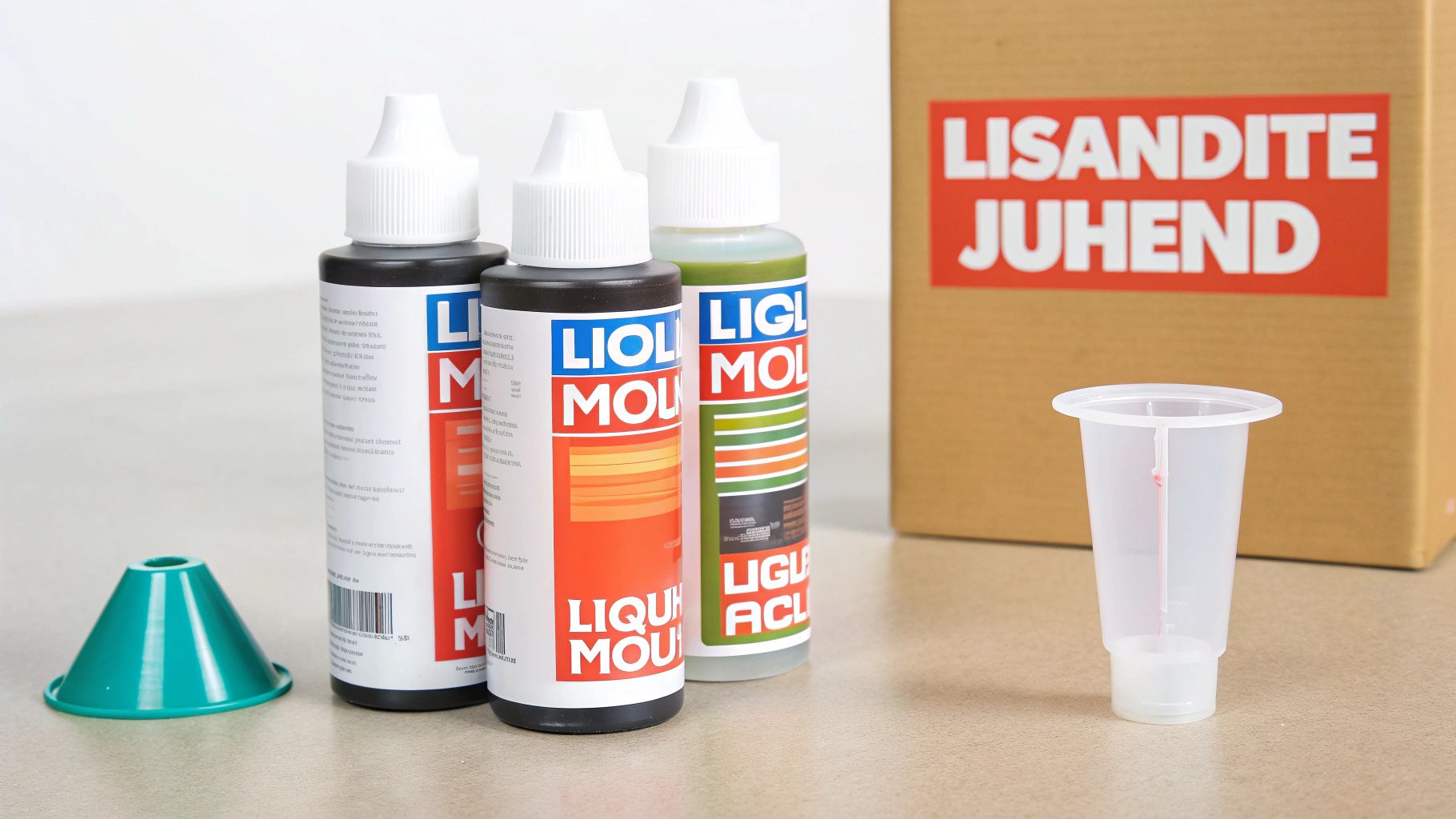
Liqui Moly additives are like a secret weapon among car enthusiasts – small but clever helpers that help solve specific concerns and prevent quite expensive repairs. At the same time, there are all sorts of myths and half-truths circulating about them, causing confusion and hindering the actual potential from being utilized.
Are they miracle cures or just placebo effect “snake oil”? As always, the truth lies somewhere in between – specifically in their conscious and correct use. Each Liqui Moly additive is the result of hundreds of laboratory tests and real-world trials designed to fulfill one specific purpose.
In this regard, we will debunk the most common myths and provide completely practical tips on how to choose and use additives so that the result is real and genuinely beneficial for your car's engine.
Myth 1: Modern oils already contain everything necessary
This is probably the most common misconception. And it is partly true. Modern quality oils, such as the Liqui Moly Top Tec series, do indeed contain a very good additive package that ensures engine protection under completely normal driving conditions. They are designed to be excellent compromises for everyday use.
Imagine that engine oil is like your daily balanced diet. Sometimes, however, the body – or in this case, the engine – needs a specific vitamin or even a treatment course to solve a particular problem.
This is where additives come into play. They do not replace the properties of the oil itself but complement them, providing targeted relief for concerns that a universal oil cannot handle. For example, a standard oil cannot silence hydraulic lifters that have already become noisy or clean the fuel system of deeply embedded residues.
Practical Scenarios and Specific Solutions
Instead of rambling on dry theory, let’s look at real situations that every car owner may face at some point. And we will provide recommendations on which Liqui Moly additive solves the problem.
Situation 1: Car emissions do not meet the standards during inspection A classic concern, usually caused by incomplete combustion and accumulated contaminants in the fuel system and combustion chamber.
- Gasoline engine solution: Pro-Line JetClean is an intensive cleaning course that removes stubborn deposits from injectors, valves, and the combustion chamber. If used just before the inspection, it can significantly improve emissions readings.
- Diesel engine solution: Pro-Line Diesel System Cleaner does exactly the same job in a diesel engine, cleaning both the high-pressure pump and the injectors.
Situation 2: An older engine has started to “consume” oil Increased oil consumption is often caused by valve stem seals that have lost their elasticity and hardened over time or gaps created by wear between piston rings and cylinder walls.
- Solution: Oil Smoke Stop is an additive that raises the oil's viscosity specifically at the hot operating temperature of the engine. It helps seal gaps between moving parts, reducing oil access to the combustion chamber and thus also blue smoke from the exhaust. It is like a temporary patch that helps delay expensive engine repairs.
Liqui Moly engineers test each additive formula on average over 900 times before it goes into production. Additionally, a sample can from each product batch is kept until the end of the product's shelf life to ensure complete traceability and quality.
Engine Cleaning with Engine Flush – Why It Is Critical?
One of the most important yet often forgotten activities is cleaning the engine before an oil change. Over time, deposits, sludge, and other dirt inevitably accumulate in the engine, which fresh oil alone cannot wash out.
Liqui Moly Engine Flush is added to the old oil just before it is drained. The engine should then be allowed to idle for about 10 minutes. During this time, the active cleaning agents dissolve all deposits and keep them suspended in the oil.
The result is that all the dirt flows out of the engine with the old oil. Without this, the sludge would mix immediately with the new and clean oil, significantly reducing its lifespan and effectiveness. This is a simple but extremely effective trick to ensure the long life of the engine.
Myth 2: Additives can actually damage the engine
This fear is entirely justified when using products of unknown origin and questionable quality. However, with Liqui Moly, the situation is the opposite. Each product is designed to be fully compatible with the materials of the engine, whether they are seals or various metal alloys.
For example, the extremely popular wear-resistant additive Cera Tec uses micro-ceramic particles that are small enough to pass freely through even the finest oil filters and channels. If you want to provide your engine with the best protection, read more information in our online store: Liqui Moly Cera Tec oil additive.
In summary, Liqui Moly additives are not miracle cures but science-based tools. Their correct and targeted use helps keep your car's engine in the best condition, solve annoying problems, and save a considerable amount on repair costs in the long run.
Liqui Moly Comparison with Other Top Brands
You stand in front of the shelf before an oil change and think: Liqui Moly, Castrol, Motul…? All are well-known names and promise the best for the engine. Although they all undoubtedly produce top-class lubricants, the real difference lies in the details – in each brand's philosophy and approach. The goal is not to find one “winner” but to help you understand what makes Liqui Moly special and why it might be the best choice for your car.
Instead of comparing marketing slogans, let’s look at specific things that distinguish Liqui Moly from others. Whether it’s the place of production, the depth of the product range, or what they do with additives – these nuances ultimately determine how well your engine is actually protected.
“Made in Germany” – More Than Just a Label
The very first and perhaps most important difference is Liqui Moly's ironclad principle: all production is exclusively manufactured in Germany. While many other major brands produce their oils under license in various factories around the world, with Liqui Moly, you can be sure that every bottle with their logo comes straight from the Saarlouis or Ulm factory.
What does this mean for you? Complete control over the entire process, from raw material selection to the final quality control. This uncompromising approach is what ensures stable and consistently high quality that car owners have trusted for decades.
Additives as the Brand's Secret Weapon
When we compare similar performance top oils, such as the Liqui Moly Top Tec series and Castrol EDGE or Motul 8100 X-clean, they often seem quite similar on paper. All offer excellent protection and meet stringent car manufacturer requirements.
However, Liqui Moly's true trump card comes into play with their exceptionally wide and specific range of additives. While other brands may have a few general-purpose additives, Liqui Moly offers targeted solutions for almost every concern that may arise in the engine, transmission, or fuel system.
Think of it this way: Castrol and Motul provide your car with an excellent and balanced nutrition plan. Liqui Moly, however, also provides specific vitamins, supplements, and even medicines when needed to solve specific problems – whether it’s excessive oil consumption, clogged injectors, or rattling hydraulic lifters.
This makes Liqui Moly a comprehensive maintenance system that not only lubricates but also cares for, cleans, and prevents problems. This is especially valuable for older cars or vehicles with specific concerns, where the right additive can save you from repair bills amounting to thousands of euros.
Product Development and Trust That Can Be Measured
Liqui Moly continuously invests in research and development to create products that not only meet but often exceed car manufacturers' minimum requirements. They do not just try to adhere to standards but create new standards, offering better protection. This is also reflected in their global success. Recently, Liqui Moly achieved a record turnover of 1.03 billion euros, growing by 12.1% and selling 111,000 tons of oil. These numbers speak for themselves and confirm the brand's reliability even in Estonia. By the way, you can find more information about this achievement here.
Let’s take a closer look at a few popular product lines:
- Liqui Moly Top Tec vs Castrol EDGE: Both are top-class synthetic oils for modern engines and have numerous approvals from car manufacturers. However, Top Tec stands out with its incredibly wide range, offering specific solutions for a wide variety of European and Asian cars, especially regarding low ash content oils for DPF-equipped diesels.
- Liqui Moly Synthoil vs Motul 300V: While Motul 300V is an undeniable legend on the racetrack, Liqui Moly Synthoil is also 100% PAO (polyalphaolefin) based fully synthetic oil that brings racing-level protection to your street car. For everyday sporty driving, Synthoil is often an even better choice, offering longer life and stability even under normal conditions.
Ultimately, the choice is yours. If you are simply looking for very good oil that meets manufacturer requirements, both Castrol and Motul are excellent choices. However, if you want to provide your car with comprehensive maintenance based on uncompromising German quality and the ability to solve specific problems, Liqui Moly with its wide product range and specialized additives is often a step ahead. The OILER.ee team will help you find the most suitable Liqui Moly product for your car.
Frequently Asked Questions About Liqui Moly
Every well-known brand with a wide product range always raises questions, and Liqui Moly is no exception. We have gathered the most common questions we hear from both hobby mechanics and more experienced specialists and provided short and clear answers.
The goal is to give you the necessary knowledge quickly so that you can make confident and correct decisions in maintaining your car without delving into overly complicated technical details.
Can I mix different Liqui Moly engine oils?
Although oils with similar specifications are technically mixable, the short and firm answer is: not recommended. Think of each engine oil as a finely tuned recipe. Engineers have created a specific additive package for it to achieve a certain level of protection and properties for your engine.
Mixing different oils is like combining two different top chefs' recipes – it dilutes the original idea of both and weakens their interaction. The result is an oil whose properties no longer meet the promises of either product.
Of course, if you find yourself on the road and discover that the oil level is critically low, adding oil with a similar specification in an emergency is better than driving with a dry engine. However, a complete oil change with a filter should be done at the first opportunity using one consistent product designed for your car.
How often should I use Liqui Moly fuel additives?
This entirely depends on your goal and driving style. Liqui Moly offers additives for both preventive maintenance and solving already existing problems.
- Preventive maintenance: To keep the fuel system clean and prevent deposits, it is advisable to use products like Injection Reiniger (for gasoline) or Super Diesel Additive (for diesel) every 2000–5000 km. This is like a vitamin course for your car.
- City driving: If most of your trips are short in the city, where the engine does not get properly warmed up, more frequent use of additives (for example, with every tank) helps prevent system fouling and blockages.
- Problem-solving: If you already have a concern – for example, the engine is sputtering at idle or emissions readings are high – it is worth using the more intensive Pro-Line series products. In this case, follow the usage instructions on the packaging closely.
Why are Liqui Moly oils more expensive than some other brands?
Several very specific reasons justify the premium price of Liqui Moly, ensuring the high quality and reliability of the products. This is not just marketing but a real investment in the health and longevity of your car's engine.
Here are the main factors:
- Produced only in Germany: Absolutely all Liqui Moly products are exclusively manufactured in Germany. This ensures ironclad and consistent quality control at every stage of production, unlike many competitors who produce their products under license worldwide.
- Continuous research and development: The company constantly invests in innovation. The result is formulations that not only meet but often exceed car manufacturers' minimum requirements. This means better protection even under extreme conditions.
- Highest quality raw materials: Only top-class base oils and additive packages are used. These may be more expensive but ensure better performance, stability, and longer lifespan of the oil.
Ultimately, a higher price means an investment in better engine protection and cleanliness, which helps prevent much more expensive repairs in the long run.
Are Liqui Moly products suitable for hybrid and electric cars?
Yes, of course. Liqui Moly has always kept pace with the development of the automotive industry and continuously develops products that meet the specific needs of the most modern powertrains.
For hybrid cars, special low-viscosity oils (e.g., 0W-16, 0W-20) have been created. These are optimized to withstand frequent start-stop cycles and provide immediate lubrication even when the internal combustion engine is only switched on for a short time.
Although electric cars do not have a classic engine, they also require specific fluids, such as transmission oil, battery coolant, and brake fluid. Liqui Moly also produces these, ensuring the best operation and longevity of electric vehicle systems. You can find suitable products for the newest vehicles in our OILER.ee selection.
Your car deserves the best, and with the right knowledge, ensuring quality maintenance is easy. In the OILER online store, you will find a wide selection of Liqui Moly products along with expert recommendations to help you always make the best choice. Explore the entire selection and ensure your car a long and trouble-free lifespan at https://oiler.en.