


Checking the VIN code is one of the most important steps when buying a used car, helping you stay away from both fraudsters and hidden defects. This 17-digit code is essentially the car's personal identification number, revealing its true story – from leaving the factory to potential accidents and mileage alterations.
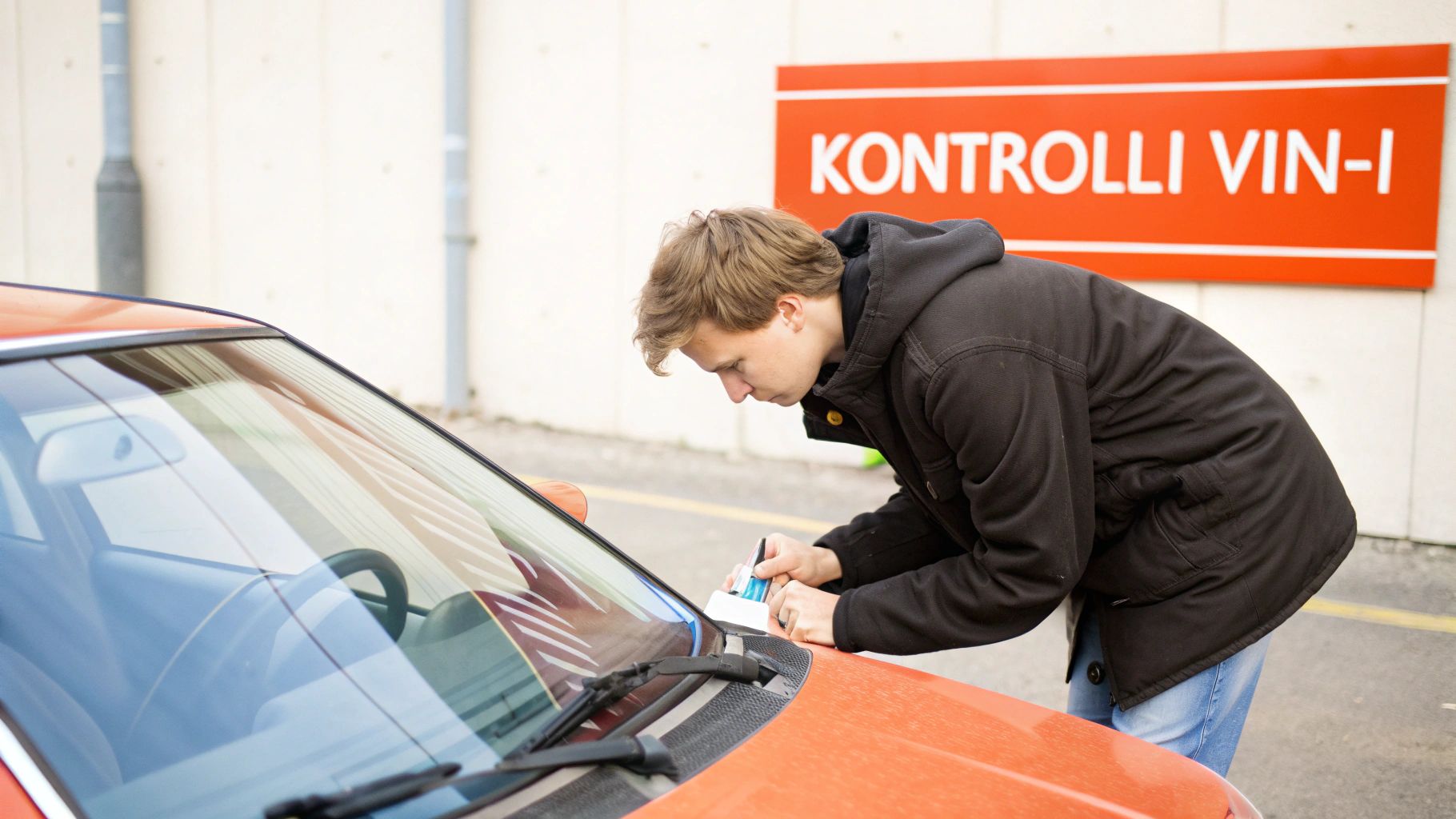
Why is Checking the VIN Code Essential in Estonia?
Let’s be honest – buying a used car can sometimes feel like a lottery, especially here in Estonia. The average age of our car fleet is an impressive 17 years. With cars of this age, previous accidents and rolled-back mileage are unfortunately more the rule than the exception.
This is where checking the VIN code comes into play. It’s not just a tedious formality, but your best shield against fraudsters and unexpectedly large repair bills. The easiest way to think of the VIN code is as the car's DNA, telling its true story.
Your First Line of Defense Against Fraud
Every sales advertisement paints an ideal picture of the car, but the reality revealed by the VIN report is often quite different. It is especially important to research the car's background if it has recently been imported from abroad to Estonia.
- Revealing hidden damages. The report may show photos of a car that has been written off by insurance abroad, but is being sold here as "in perfect condition" and "accident-free".
- Identifying mileage fraud. If the report shows that the odometer reading has inexplicably decreased at some point in time, it is a sure sign of rolling back.
- Avoiding former taxi or rental cars. It is often the VIN check that brings to light that the vehicle has been in intensive use, which is otherwise kept quiet.
Neglecting to check the VIN code is one of the most expensive mistakes a used car buyer can make. This small investment in time and money can save you thousands of euros in unexpected problems in the future.
It’s Much More Than Just a History Check
In addition to preventing fraud, the VIN code also has very practical value in the daily maintenance of the car. The code hides precise information about your car's engine, transmission, and even equipment level.
This knowledge is essential for ensuring the car's long lifespan. For example, by entering the VIN code on OILER.ee, you can find the right engine oil and filters for your car in seconds. This eliminates dangerous assumptions and gives you confidence that you are always using the products recommended by the manufacturer. This way, you avoid costly engine damage and maintain the car's value. This guide shows you how to leverage all this information to your advantage.
How to Find and Decode the Secrets of the VIN Code
Before you can conduct a thorough investigation of the car, you first need to find its unique 17-digit VIN code. Fortunately, this is usually quite simple – manufacturers have placed it in specific and easily accessible locations.
The very first and most common place to start looking is the lower corner of the windshield on the driver's side. Usually, this code is engraved on a small metal plate and is clearly visible from the outside. This design is intentional so that, for example, the police can quickly check the code without opening the car.
Main Locations on the Car
If you can't find the code at the windshield, there's no need to worry. There are several other places to look. The exact location may vary slightly by make and model, but some options are quite universal.
- Driver's door pillar: Open the driver's side door and look at the door post, usually near the lock's striker plate. There you will find a sticker that often includes information about tire pressures and permissible weights in addition to the VIN code.
- Engine compartment: Especially in older cars, the VIN may be stamped directly on the firewall (the wall separating the cabin and the engine) or on the shock absorber mount.
- Vehicle documents: The most reliable source is, of course, the car's technical passport or registration certificate. This is a legally binding document, and the code must always be present there.
It is extremely important to always ensure that the VIN codes on the car's body and documents match exactly. If they do not match or the code is visibly tampered with, it is a major red flag and may indicate fraud.
The following table provides a quick overview of the main locations to search for the VIN code, along with practical notes.
Common Places to Find the VIN Code
| Location | Description | Note |
|---|---|---|
| Lower corner of the windshield | A small metal plate on the driver's side, visible from the outside. | The quickest and most common way to find the code. |
| Driver's door pillar | An informative sticker on the door post. | A good place for double-checking and getting additional information. |
| Technical passport | An official document where the VIN is always recorded. | Absolutely mandatory check before purchase. |
These are the most typical places, but sometimes the code can also be found on the trunk floor near the spare tire or even directly on the frame rail in framed cars.
What the VIN Code Actually Means
Once the code is found, the exciting part begins. This 17-character sequence of letters and numbers is not random at all; it is divided into three logical parts, each carrying specific information.
WMI (World Manufacturer Identifier) – the first three characters. This part indicates which country and manufacturer made the car. For example, WVW refers to a Volkswagen produced in Germany.
VDS (Vehicle Descriptor Section) – the next six characters. Here lies the technical description of the car: model, body type, engine, and even safety equipment. This part is crucial when looking for the right spare parts. If you want to know more about how to find the right oil for your car, our article on oil selection online provides useful information.
VIS (Vehicle Identifier Section) – the last eight characters. This is the car's unique serial number, which also includes information about the production year and specific factory. This last part makes each car unique.
How to Check the VIN Code: Free and Paid Tools
So, the VIN code has been found. What’s next? Now you need to decide whether to stick with a quick free inquiry or invest a few dozen euros in a comprehensive paid report. This choice largely depends on the car's history and how much risk you are willing to take.
Every VIN code check should actually start with the free options. This is the quickest and easiest way to get an initial overview of a car that has been registered in Estonia for some time. With these tools, you can obtain basic information to make initial conclusions.
Free Check Options – The First and Mandatory Step
In Estonia, the most important and reliable free source is the e-service of the Transport Administration. This should be absolutely the first step for any car registered here.
- Transport Administration e-service: Enter the VIN code or license plate number, and you will immediately receive the car's basic technical data, inspection history with mileage readings, and valid insurance information. This is the best tool to identify mileage rollbacks made in Estonia.
- Official manufacturer databases: Some car manufacturers offer limited access to databases on their websites. From there, you can check information about recall campaigns or the car's original equipment using the VIN code.
A free check is perfectly sufficient if you are buying a car that was purchased new in Estonia and has had only one or two owners. In this case, the likelihood of the car having hidden international damages is quite minimal.
The following image provides a good visual overview of this simple process: finding the code, reading it, and interpreting the information.
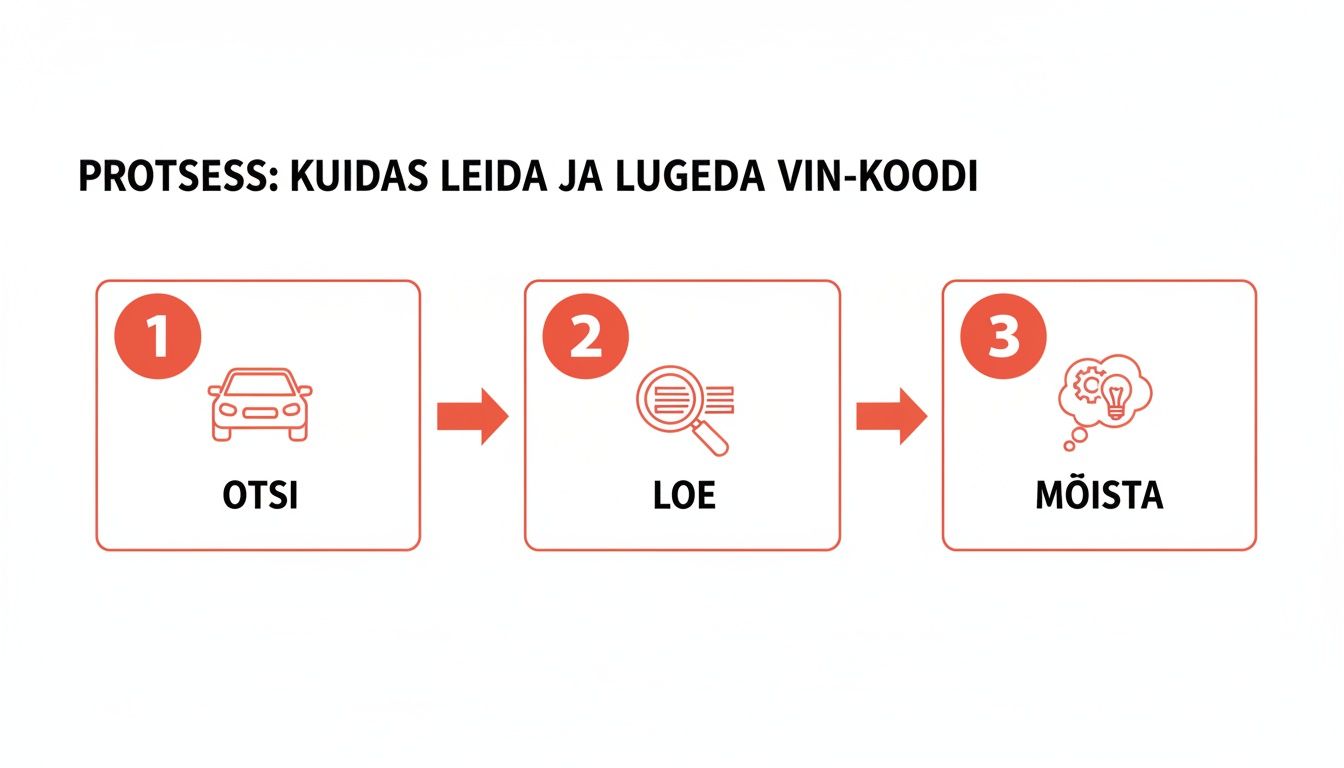
It is this – finding the code, reading it, and understanding it – that forms the foundation for any further checks, whether free or paid.
When is a Paid Report Practically Mandatory?
The picture changes dramatically when a freshly imported car from abroad is in view. At that point, a paid report becomes essential. It is with these cars that hidden damages, rolled-back mileage, and other unpleasant surprises most frequently occur.
Paid platforms like autoDNA or carVertical are essentially data collectors that pull information from dozens of sources worldwide: insurance company databases, auction portals, repair shops, and various country registries. Considering that there are 829,203 vehicles registered in Estonia with an average age of 17.6 years, thorough background checks are critically important. Studies have shown that as much as 10% of advertisements may contain false VIN codes to hide the car's dark past. You can read more about the Estonian car fleet in the Transport Administration statistics.
Do not view a paid report as an expense, but as an investment. This few dozen euros is a small price for the peace of mind that comes with knowing you are not buying someone else's problems for thousands of euros.
What Does a Paid Report Actually Reveal?
The greatest value of a paid report is the detail that free sources can never provide. It’s like detective work that has already been done for you.
Some examples of information that can be found there include:
- Photos of previous accidents: The report often includes pictures of the car from an insurance auction, where the extent of accident damage is clearly visible in black and white.
- International mileage history: If the odometer has been rolled back before the car arrived in Estonia, a comparison with international databases will likely reveal this.
- Previous usage purpose: The report may reveal whether the vehicle was a rental car, taxi, or driving school car, all of which indicate above-average wear and tear.
- Theft registry: International databases are checked to ensure that the vehicle is not on the stolen list.
Ultimately, the decision is of course yours. For a car with a long and clear history in Estonia, a free check may be completely sufficient. However, if you are buying a vehicle imported from abroad, a thorough paid VIN code check is the best insurance you can afford. Among other things, it also helps to accurately identify engine modifications to choose the right Liqui Moly products and ensure a long life for the engine.
Frauds Every Car Buyer Should Know About
A thorough VIN code check is your best shield in the used car market, which is unfortunately rife with fraud. It is precisely this step that distinguishes a good deal from a potential financial disaster. Unfortunately, there are far too many sellers willing to twist the truth about a car's history to close the deal faster and more profitably.
The most common and notorious trick is, of course, rolling back the odometer. This is an easy way to artificially inflate the car's value, leaving the impression that the vehicle has lived and seen much less than it actually has.
How to Detect Odometer Tampering?
Manipulating the odometer reading is unfortunately still a widespread practice. Imagine the situation: the sales advertisement boasts a mileage of 180,000 km, but the VIN report shows that two years ago, the mileage was recorded as 290,000 km during an inspection abroad. Such a discrepancy is clear and irrefutable evidence of fraud.
A paid history report ruthlessly brings such anomalies to light, lining up mileage readings from different sources on a timeline. Keep an eye out for the following warning signs when examining the report:
- Illogical jumps: The mileage is lower at some point than it was on the previous recorded date. This is physically impossible.
- Stagnation: The car's mileage has hardly changed over the years, even though it is clear that the car has been used.
- Suspiciously low mileage: Especially for diesel cars imported from Germany or elsewhere in Europe, absurdly low mileage is often the first red flag.
Studies show that odometer tampering affects at least 15-25% of used car sales in Estonia. Since nearly 27% of the cars sold here are imported from countries where this is a common problem, the risk is indeed high. Incorrect mileage not only means being deceived but can also lead to wrong maintenance decisions – such as using the wrong engine oil, which in turn can cause up to 30% faster engine wear. Read more about how VIN code checks help prevent fraud.
Revealing Hidden Accidents and Write-Offs
Another major risk is hidden accidents. It is not uncommon for a car that has been in a serious accident in the USA or Western Europe and written off by insurance (salvage title) to be cheaply patched up and sold in Estonia as a "car in perfect condition".
A real-life example: a buyer checks the VIN code of a luxury SUV imported from the USA. The report reveals photos of the car that was submerged in a flood and declared a total loss by insurance. However, the seller claimed it was a "lightly used and well-maintained car".
Such cars are ticking time bombs. Their safety features (such as airbags) may no longer function, and hidden body and electronic faults may only manifest months later, leading to repair bills running into thousands of euros. A proper history report often reveals even photos from the insurance auction, where the car's actual condition is plainly visible.
Identifying Former Taxis and Rental Cars
Vehicles that have served as taxis or rental cars have undergone very intensive use. This means tremendous wear and tear on the engine, transmission, chassis, and interior. Sellers almost always try to hide this fact, as it would significantly lower the car's value.
However, the VIN report can reveal the car's previous life if it has been recorded somewhere in a registry. Signs that indicate this include unusually frequent maintenance intervals or the fact that the car's first owner was a well-known rental company or taxi service. Be vigilant – a little homework can save you from a major headache later on.
How to Use the VIN Code to Find the Right Engine Oil and Spare Parts
Checking the VIN code is far from just a one-time issue at the time of purchasing the car. It is actually one of the most practical tools for your daily car maintenance. Think of it as your car's personal cheat sheet, revealing detailed information about the engine, transmission, and other vital components.
This technical information is the key to helping your vehicle serve you well for a long time without issues. A seemingly small mistake, such as using the wrong oil or filter, can quietly wear down the engine over time and ultimately lead to very costly repair bills.
Never Assume Again – Always Choose the Right One
Imagine this classic situation: you stand in front of a store shelf, dozens of different oil bottles shimmering before your eyes. What viscosity? What manufacturer approvals? The risk of choosing blindly is high.
Fortunately, this process has been made incredibly easy on OILER.ee. You enter your car's VIN code, and the system instantly displays a list of products specifically designed for your vehicle. No doubts.
- Engine oils: The system matches the oil precisely to your car's engine specifications, considering both viscosity class (e.g., 5W-30) and specific manufacturer requirements (e.g., VW 504.00).
- Filters and fluids: Similarly, you can easily find suitable air, cabin, and fuel filters, as well as the correct coolant and brake fluids.
This way, you can be sure that you are always using products that the manufacturer has specified for your car. This is the simplest way to avoid potential damage and maintain your car's value.
When planning maintenance, it is also worth taking a look at the car's history. If the vehicle has ever been involved in an accident, certain systems may require more attention than usual or specific fluids.
It is known that 10-20% of the used cars sold in Estonia have been in accidents, which is precisely what checking the VIN code helps to identify. For example, a history report may reveal that the car has had front-end damage that may have affected the steering system. In this case, the choice of the correct power steering fluid is even more critical. Using OILER's VIN service prevents the selection of an inappropriate product, which studies show is responsible for up to 25% of all repair costs. Find out more about how VINinfo.ee helps discover car history.
Practical Benefits for Every Car Owner
Ultimately, using the VIN code to find the right spare parts and fluids saves pure time, money, and nerves. Instead of spending hours surfing forums or studying the manual, you can get a definite and correct answer with just a few clicks.
This is especially helpful if you want to maintain your car yourself but are not 100% sure about all the technical nuances. To ensure your car always receives the best care, explore our wide selection of suitable engine oils and see for yourself how easy it is.
Frequently Asked Questions
Here are some answers to questions that car buyers often have about the VIN code. I hope these practical explanations help you act even more confidently in the process and make better decisions.
Even the most thorough VIN code check may not be 100% accurate, although it is undoubtedly the best tool for investigating a car's past. The accuracy of reports depends entirely on whether and how events have been digitally recorded.
For example, repairs done for cash in some "back-alley" garage are unlikely to appear in any official database. Similarly, minor parking bumps that have been resolved without involving insurance may leave no trace in history.
The good news is that a quality report still reveals most major and important events – especially international insurance claims, maintenance done at official dealerships, and mileage readings recorded during inspections.
Always combine the VIN code check with a thorough on-site inspection and a proper test drive. These three steps together provide the most honest picture of the car's actual condition.
What to Do If the Seller Refuses to Provide the VIN Code?
This is one of the biggest warning signs you can encounter when searching for a used car. An honest seller who is confident in their car's condition has no reason to hide this information.
If the seller starts making excuses, claims they can't find the code, or outright refuses, it is almost always a sign that there is something in the car's history they do not want you to see. This is a classic behavior pattern of fraudsters.
My advice in such a situation is very simple and straightforward: leave that car alone and look for another one. The risk is simply too high to buy a vehicle whose past is being deliberately hidden from you.
Can the VIN Code Reveal the Car's Equipment Level?
Yes, absolutely! This is one of the very practical uses of the VIN code. Most comprehensive VIN decoders and paid history reports can display a list of the car's factory equipment.
This is a great way to quickly check whether the extras promised in the sales advertisement were already installed by the manufacturer or if they are potentially dubious quality gadgets added later. For example, you can immediately verify whether the car indeed has a factory sports package, a better sound system, or specific driver assistance systems.
This information also helps to immediately identify situations where the seller has misrepresented the car's equipment to artificially inflate its price.
Every car needs proper maintenance, regardless of its history. OILER helps you find the exact right engine oil and other fluids using the VIN code to ensure your car has a long and trouble-free life. Explore and find the best products for your vehicle in our online store: https://oiler.ee.
Crafted with Outrank tool